Bringing Your Pet from Japan to Indonesia
Taking a dog or cat from Japan to Indonesia runs through the Animal Quarantine Service, the branch of Japan’s Ministry of Agriculture, Forestry and Fisheries that handles animal export inspection. You apply for an export inspection in advance, the inspection happens shortly before departure, and the AQS issues an export quarantine certificate in English. On the Indonesian side you need an import permit, and your pet arrives at Jakarta and completes the required arrival quarantine.
The Japanese process is orderly and well documented, which is good news. It is also governed by two fixed windows that decide your entire schedule, and those are worth understanding before you pick a flight.
The two windows that set your timeline
The AQS asks you to apply for export inspection at least 14 days before export, submitted through the NACCS system with your veterinary clinic certificates attached. The inspection itself takes place within 10 days before departure, unless the destination country requires otherwise.
Read those together and the shape of the plan becomes clear. Your application goes in at least two weeks out, your inspection lands inside the final ten days, and your flight has to sit after the inspection. The inspection is not a formality you can slot in on the morning of travel, and a flight change after the certificate is issued can mean redoing work. We build the booking around those windows rather than the other way around.
The AQS notes that the inspection and certificate issue usually take about 30 to 60 minutes, and that you bring photo identification, the animal, and all original certificates. Inspections take place at AQS offices, with Narita, Haneda and Kansai airport offices open daily from 8:30 to 16:30, and Narita cargo keeping different hours. Haneda inspects at the CIQ building in Terminal 3 and Kansai at the CIQ building in Terminal 1.
What Japan asks for, and what Indonesia asks for
This is the distinction that causes most of the confusion. Japan’s own export page is largely concerned with the export inspection and the certificate. It directs you to confirm the entry rules with the destination country’s animal quarantine authority, and it is explicit that the animal must meet both the destination’s rules and Japan’s exit requirements.
So the vaccination schedule, microchip and any testing your pet needs are driven by Indonesia’s import conditions, and the AQS then certifies against them. Getting that order right is the whole game. Owners who book an inspection before the Indonesian import permit position is settled often find the certificate does not say what Indonesia needs it to say.
The AQS also recommends checking before inspection day that the microchip is readable. That sounds trivial until a chip fails to scan with the animal already at the counter.
If your pet might come back to Japan
Worth flagging early, because it changes decisions made now. The AQS advises checking Japan’s re-entry requirements before you leave, and notes that depending on the measures taken, quarantine on return to Japan can take up to 180 days. If there is any chance of a return posting, the preparation for that is started before departure, not afterwards. We raise this with every owner leaving Japan on a work assignment.
Flights from Tokyo and Osaka
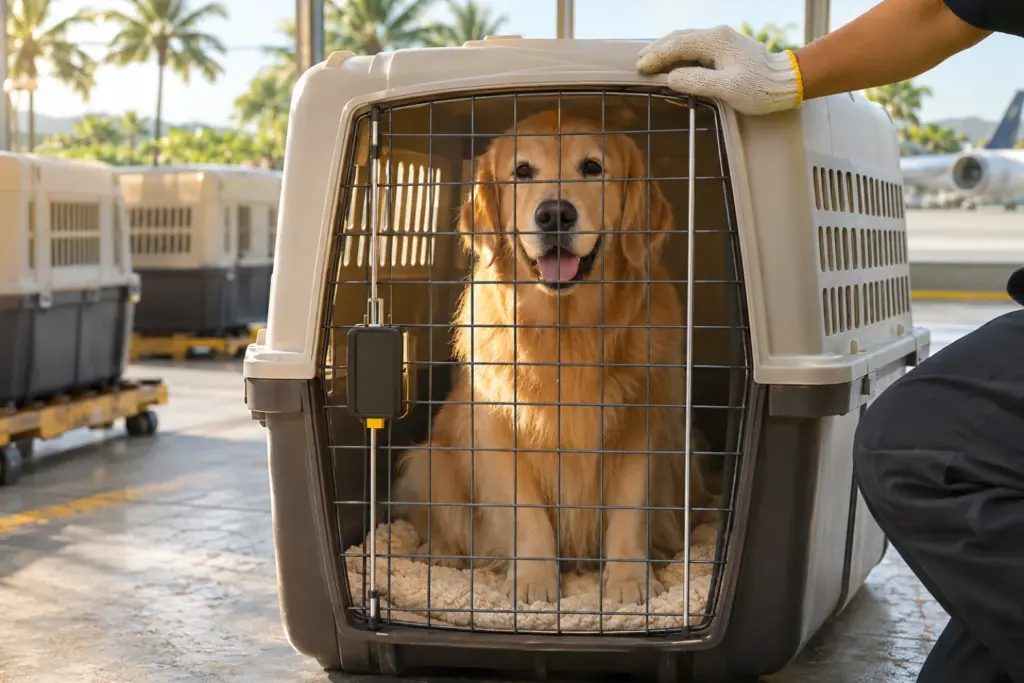
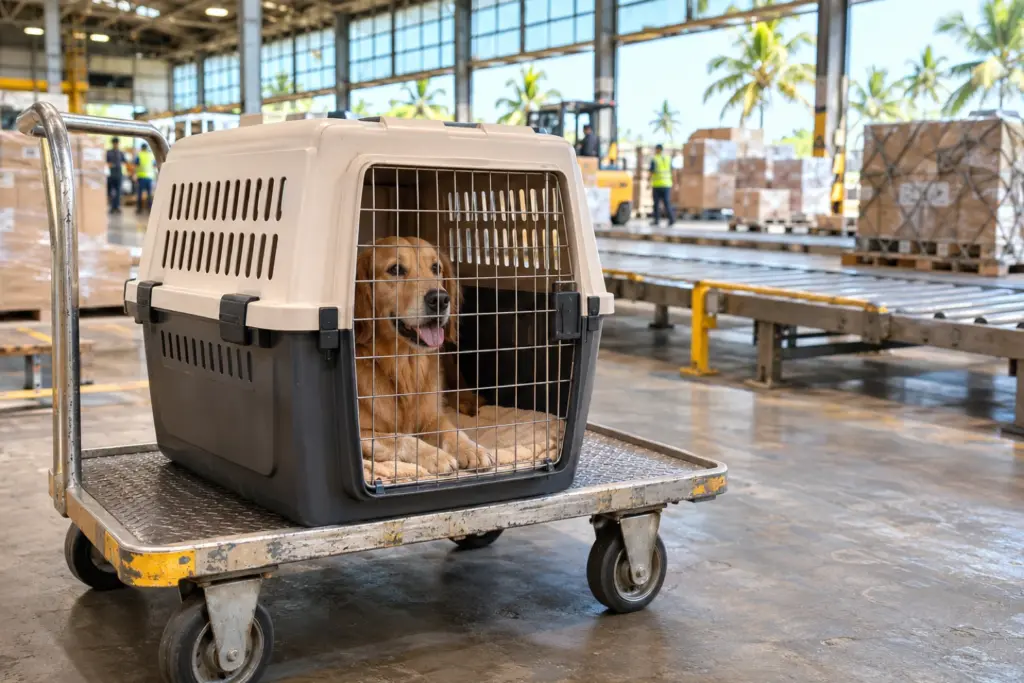
Narita, Haneda and Kansai are the practical departure points, and your pet travels in the hold as cargo. Some routings to Jakarta are direct and others connect through a regional hub, and the choice interacts with the inspection window, because the certificate has a limited life. Airlines also apply their own breed conditions and seasonal embargoes, which matter most for snub nosed dogs and cats such as pugs, French bulldogs and Persians.
Requirements and airline conditions change. We confirm the current position for your route and breed before anything is booked.
Arrival in Indonesia
Your pet lands at Soekarno-Hatta in Jakarta. Documents are presented, Badan Karantina Indonesia takes custody, and the required arrival quarantine is completed before release. If you are heading to Bali, release in Jakarta does not automatically allow onward travel, so the domestic leg is planned separately once Bali’s current entry conditions are confirmed.
Our Japan to Indonesia country page covers the Indonesian requirements, and pet relocation to Indonesia sets out the permit and quarantine stages. If you would like to see how a Japan route looks in practice, read Piti’s travel story.
Send us your departure airport, your pet’s species, breed, age and weight, and your target month, and we will map the AQS windows against the flight options and give you a timeline you can plan around.
Preparing your pet for a long sector
Tokyo or Osaka to Jakarta is a long day for an animal even on a direct service, and longer again with a connection. The preparation that matters is unglamorous and it starts weeks ahead.
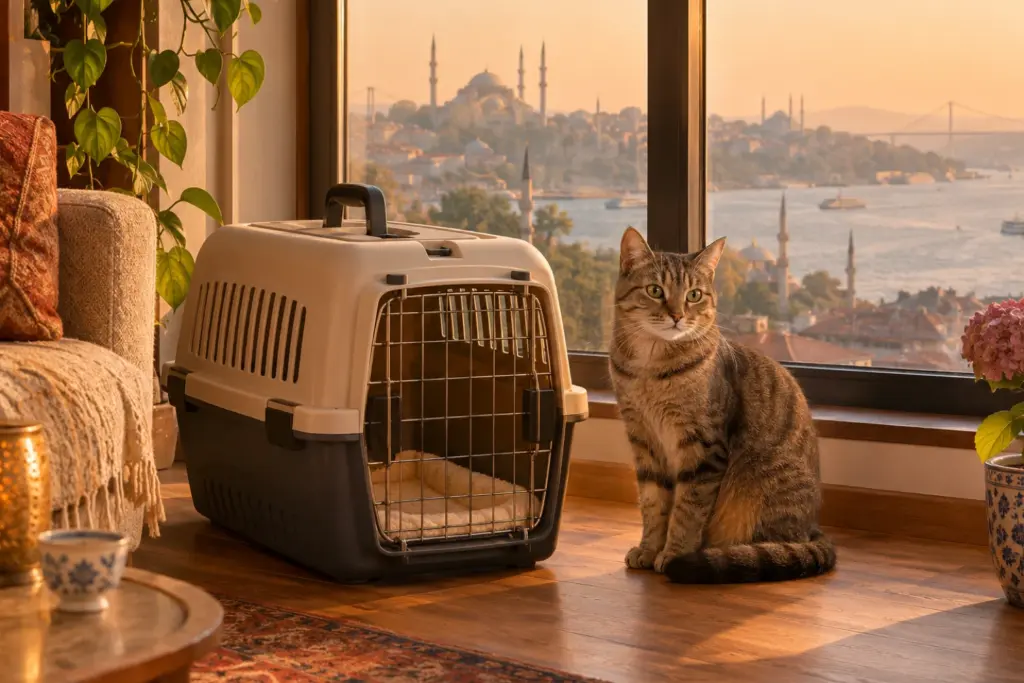
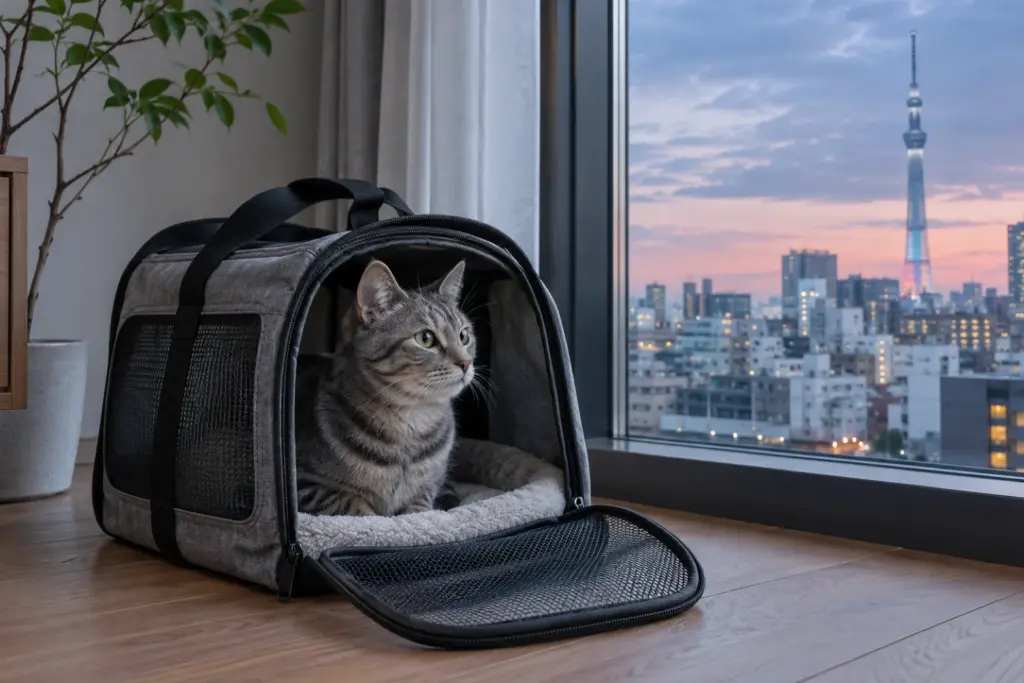
Get the crate early and make it ordinary. Feed your pet inside it with the door open, leave a familiar blanket there, and let the crate become a place they choose rather than a place they are put. Japanese apartments are not generous with floor space and owners often delay this, but an animal that already sleeps in the crate handles the journey far better than one introduced to it the night before.
Airlines assess the crate against IATA container requirements, measured against your animal: able to stand without the head touching the roof, turn around, and lie down naturally. Oversized is also wrong, since the extra room allows sliding in turbulence. Fit the water bowl so it can be refilled from outside without opening the door, and feed lightly on the day rather than a full meal.
For snub nosed breeds, which are common among cats in Japan, check the airline’s current conditions before anything else in the plan is fixed. Those conditions vary by carrier and season, and they decide the route rather than following from it.
FAQ
How far in advance do I apply for the export inspection?
The AQS asks for the application at least 14 days before export, submitted through NACCS with your clinic certificates attached. Applying by email is possible but the AQS notes that data entry takes longer.
When does the inspection happen?
Within 10 days before departure, unless the destination country requires otherwise. The AQS issues the export quarantine certificate in English after the inspection, which usually takes about 30 to 60 minutes.
Does Japan require a rabies vaccination to export?
Japan’s export page does not set a rabies vaccination requirement for leaving, and refers you to the destination country’s rules. For Indonesia the vaccination and any testing are driven by the Indonesian import conditions, which we confirm for your case.
Where do inspections take place?
At AQS offices. Narita, Haneda and Kansai airport offices are open daily from 8:30 to 16:30, with Narita cargo keeping different hours. Haneda uses the CIQ building in Terminal 3 and Kansai the CIQ building in Terminal 1.
What if we move back to Japan later?
Check Japan’s re-entry requirements before you leave. The AQS notes that return quarantine can take up to 180 days depending on the measures taken, so the groundwork is done before departure.
Can my pet fly directly to Bali?
International arrivals are handled in Jakarta, where your pet clears quarantine. Bali is a separate domestic leg, planned once the current entry conditions for Bali have been checked.