How to Import a Dog or Cat to Indonesia: Permit, Documents and Steps
Importing a dog or cat into Indonesia comes down to three things: an import permit issued before the flight, a set of vet documents that all carry the same microchip number, and a short government quarantine in Jakarta after landing. Get the order right and the process is predictable. Get one date or number wrong and your pet can be held at the airport.
This guide walks through the import paperwork step by step, in the order it is usually prepared. For the wider picture of moving with a pet (flights, settling in, life in Jakarta or Bali), see our main guide on bringing a dog or cat to Indonesia.
Importing a pet to Indonesia at a glance
- Who regulates it: the import permit comes from the Directorate General of Livestock and Animal Health Services (Ministry of Agriculture). Checks at the border are done by the Indonesian Quarantine Agency, Badan Karantina Indonesia (Barantin).
- Where pets arrive: Jakarta, Soekarno-Hatta Airport (CGK). Pets from abroad do not fly directly into Bali.
- Preparation time: plan for about 6 to 8 weeks before the flight. The rabies blood test is usually what sets the pace.
- Quarantine: every imported dog and cat goes into government quarantine in Jakarta on arrival, typically for about 7 days.
- How pets fly: as air cargo in an airline-approved crate, unless the route and airline offer an escorted option.
Rules change. Everything below reflects how the process generally works at the time of writing; always confirm the current requirements with Barantin (karantinaindonesia.go.id) and the Directorate General of Livestock and Animal Health Services (ditjenpkh.pertanian.go.id) before you book anything.
Step 1: Microchip your dog or cat
The microchip comes first, before any vaccine or blood test. Use an ISO 11784/11785 compliant chip, the 15-digit standard most scanners read. If your pet already has a chip, ask your vet to scan it and confirm the number and the standard.
Why it matters: the import permit, vaccination record, blood test result and health certificate all have to show the same microchip number. A rabies vaccine given before the chip was implanted may not be accepted, which can mean vaccinating and testing again. Our guide to preparing microchip documents for Indonesia shows what to check on each document.
Step 2: Rabies vaccination
Indonesia requires a valid rabies vaccination for imported dogs and cats. In practice this means:
- The vaccine is given after the microchip is in place.
- It is commonly required to be given at least 30 days before departure and still be valid on the day of travel.
- The vaccination record lists the microchip number, vaccine name, batch number and dates.
Other routine vaccines (for example distemper and parvovirus for dogs, and the core feline vaccines for cats) are usually expected on the health certificate as well. More detail is in our article on vaccination requirements for pets in Indonesia.
Step 3: Rabies blood test (titer test)
After the vaccine has had time to work, your vet takes a blood sample for a rabies antibody test, often called a titer or FAVN test. The sample goes to an approved laboratory, and a result of at least 0.5 IU/ml is the threshold commonly applied for Indonesia.
This step usually takes the longest. The blood draw has to wait until after vaccination, and laboratory results can take several weeks to come back. It is the main reason a realistic plan is 6 to 8 weeks, not less. If the result comes back low, your vet will advise on a booster and a new test, which pushes the timeline back.
Step 4: Apply for the Indonesian import permit
The import permit is the document that allows your dog or cat to enter Indonesia. It is issued by the Directorate General of Livestock and Animal Health Services, and it must be in hand before the airline confirms the booking.
The application typically asks for:
- Your pet’s details: name, species, breed, sex, age or date of birth, colour and microchip number.
- Copies of the vaccination record and the rabies titer result.
- The owner’s details and the address in Indonesia where your pet will live.
- The planned arrival airport (Jakarta) and approximate travel date.
Depending on current rules and your destination province, a recommendation from the local animal health office may be requested as part of the process. Processing times vary, and a permit is valid for a limited period, so the travel date needs to fall inside it. This is the step where most owners ask for help, because the forms and correspondence are in Indonesian and timing matters.
Some breeds and species face extra restrictions or cannot be imported at all. Check our list of pets restricted from entering Indonesia before you start.
Step 5: Export health certificate from your origin country
Shortly before departure, usually within the last week or so before the flight, your vet examines your pet and completes the health certificate. The certificate is then endorsed by the government veterinary authority of the country you are leaving (for example the USDA in the United States or the Department of Agriculture in Australia).
The certificate confirms your pet is healthy, free of signs of infectious disease, and lists the microchip, vaccinations and titer result. Every date and number has to match the permit. See how to get the health certificate approved for Indonesia entry.
Step 6: The flight to Jakarta
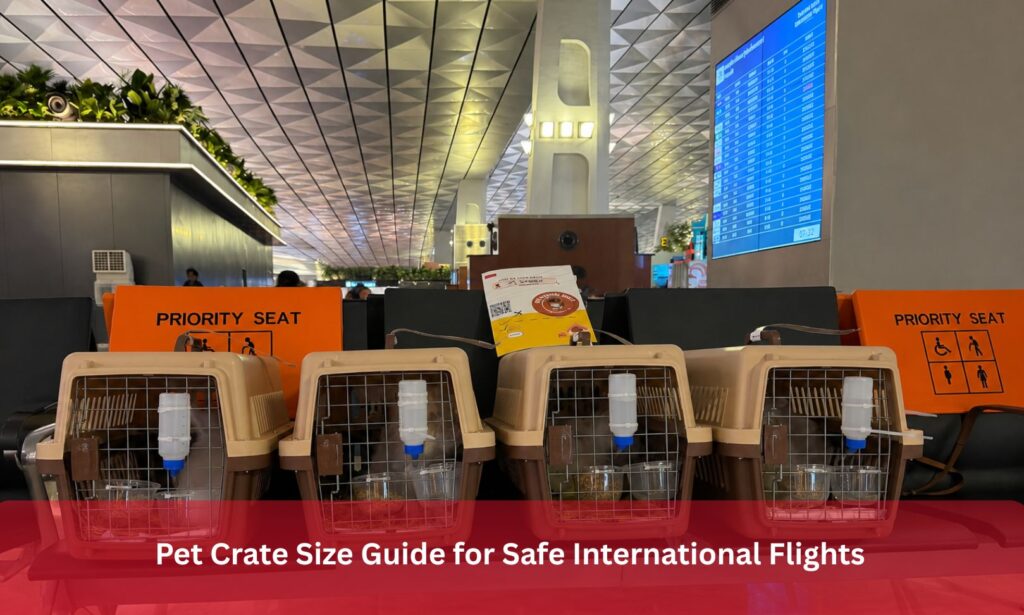
Dogs and cats imported to Indonesia normally travel as air cargo in an IATA-compliant crate, booked through the airline’s cargo or live-animal desk. The crate must let your pet stand, turn and lie down comfortably; our crate size guide explains how to measure. Snub-nosed breeds and very large dogs have extra airline limits, so check those early.
Step 7: Arrival, quarantine and release in Jakarta
When your pet lands at Soekarno-Hatta, quarantine officers check the animal and every original document against the permit. Your pet then goes to the government quarantine facility, typically for about 7 days, before release. This applies to every imported dog and cat, even when all documents are in order.
Mismatched dates, a missing endorsement or a microchip number typed wrong are the usual causes of delays. That is why the full document set should be reviewed before your pet leaves the origin country. Read more about how the Indonesian quarantine agency works.
Importing a pet to Bali
Bali is a common final destination, but it is not an entry point for pets from abroad. Your dog or cat lands in Jakarta, completes quarantine there, and then makes a separate domestic trip to Bali.
Bali has its own rules for dogs and cats arriving from other parts of Indonesia, linked to rabies control on the island, and these rules have changed several times over the years. The onward leg typically needs its own health and quarantine paperwork for the inter-island move. Treat it as a second step in your plan and check the current Bali requirements before you book. Our guide to pet import requirements for Bali covers this in more detail.
A sample import timeline
- 8 weeks or more before the flight: microchip check, rabies vaccination if needed, and a call with your relocation team about the route.
- About 6 to 7 weeks before: rabies blood test once the vaccine has had time to work; start the import permit application.
- In the final month: titer result in, permit issued, cargo space booked, crate ready and your pet getting used to it.
- Final week: health certificate and government endorsement, final document check.
- Arrival: landing in Jakarta, quarantine of about 7 days, release, then home or the onward trip to Bali.
Every case is different, and the titer result and permit date usually decide the final schedule.
Importing a dog vs a cat
The permit, documents and quarantine are the same for dogs and cats. The differences are practical: crate size, breed restrictions (which mostly affect dogs) and how each animal copes with travel. See our separate guides on relocating a dog to Indonesia and relocating a cat to Indonesia. If you are moving from a specific country, our country-by-country guides cover the export side, including Australia and the United States.
Frequently asked questions
Can I import a dog to Indonesia?
Yes. Dogs can be imported with an import permit, an ISO microchip, a valid rabies vaccination, a rabies titer test result and an endorsed health certificate. On arrival in Jakarta they go into government quarantine, typically for about 7 days.
Who issues the pet import permit for Indonesia?
The permit is issued by the Directorate General of Livestock and Animal Health Services under the Ministry of Agriculture. Border checks and quarantine are handled by Badan Karantina Indonesia (Barantin).
How long does it take to import a pet to Indonesia?
Plan for about 6 to 8 weeks of preparation before the flight, mainly because of the rabies blood test and the permit. Add about 7 days of quarantine after landing in Jakarta.
Can I fly my dog directly to Bali?
No. Pets from abroad arrive in Jakarta, complete quarantine there, and then travel on to Bali once the current Bali entry rules are met.
Is quarantine required if all my documents are correct?
Yes. Every imported dog and cat goes through government quarantine in Jakarta on arrival. Correct documents keep the stay short and avoid extra holds.
Do I need a relocation company to import my pet?
It is not required by law, but the permit application, cargo booking and arrival handling are time-sensitive and mostly in Indonesian. Pet Travel Indo prepares the permit, checks your documents before departure, and handles arrival, quarantine and delivery to your home.
Planning to import your dog or cat? Tell us your pet, origin country and travel month on WhatsApp, and we will reply with a document checklist and a quote.