Rabies in Bali: What It Means for Your Pet

Rabies is present in Bali, and that single fact shapes much of how pet relocation to and from the island works. Rabies is endemic in a large share of Indonesia’s provinces, Bali among them, and the provincial authorities run ongoing mass dog vaccination programmes with a stated goal of reaching rabies free status by 2030. For an owner bringing a dog or cat to Bali, or keeping one there, this matters in two separate ways: it affects the rules your pet travels under, and it affects daily life on the island.
This guide explains both, without the alarmism that tends to surround the topic. Rabies status is a regulatory and public health matter, and the current position should always be checked with official sources rather than assumed from an article.
What Bali’s rabies status means for travel rules
A destination country’s rabies risk category decides a great deal about pet movement. For animals coming into Indonesia it shapes the vaccination and testing your pet needs before departure. For animals leaving Indonesia it often matters more, because many destinations apply stricter conditions to animals that have lived in a rabies affected area, including rabies antibody titre testing and waiting periods measured in months rather than weeks.
If you are moving to Bali and there is any chance you will move on again later, this is the thing to plan for now. Owners who begin the return journey preparation only when their next posting is confirmed are usually the ones who end up separated from their pet for a stretch. We raise this at the first conversation rather than at the end of it.
Categories and conditions change, and they are set by the authorities of the country your pet is travelling to. We confirm the current requirements for your specific route before a plan is fixed.
How Bali handles rabies on the ground
Rabies reached Bali in late 2008 and has remained present since, despite repeated mass vaccination campaigns. Provincial reporting through 2026 describes intensified vaccination of dogs and cats, with coverage reported at roughly 70 percent of an estimated dog population of around 605,000, and officials noting that a significant share of the dog population remains unvaccinated. Individual regencies run their own campaigns, including door to door vaccination following local cases.
Those figures move, and different reports give different numbers. Treat them as an indication of an active, ongoing programme rather than as a fixed statistic. The provincial animal husbandry service and your local banjar are the practical sources for what is happening in your area.
Keeping your own dog or cat protected
The measures that matter are unglamorous and they work.
- Keep the rabies vaccination current. Not just valid for paperwork, but genuinely up to date. Booster schedules are set by your vet based on the vaccine used.
- Keep your dog contained. Free roaming is the main exposure route. A secure garden and a lead on walks removes most of the risk.
- Avoid contact with free roaming dogs. Bali has a large free roaming dog population, and interactions at the beach or on quiet lanes are where exposure happens.
- Know your nearest clinic before you need it. Find it in your first week, not during an incident.
- Treat any bite or scratch as urgent. For your pet and for yourself. Wash thoroughly and seek medical and veterinary advice immediately rather than waiting to see what happens.
Our guide on what vaccinations and treatments your pet needs before moving to Bali covers the wider vaccination picture, and recommended veterinary clinics in Bali is a useful starting point for finding care near you.
Local rules for dog owners
Bali applies its own requirements to dog ownership, including vaccination and containment expectations, and these are enforced locally. New arrivals sometimes assume the relaxed atmosphere means relaxed rules. It does not, and the rules exist precisely because of the rabies situation. Our overview of dog ownership rules and regulations in Bali sets out what to expect.
Bringing a pet to Bali
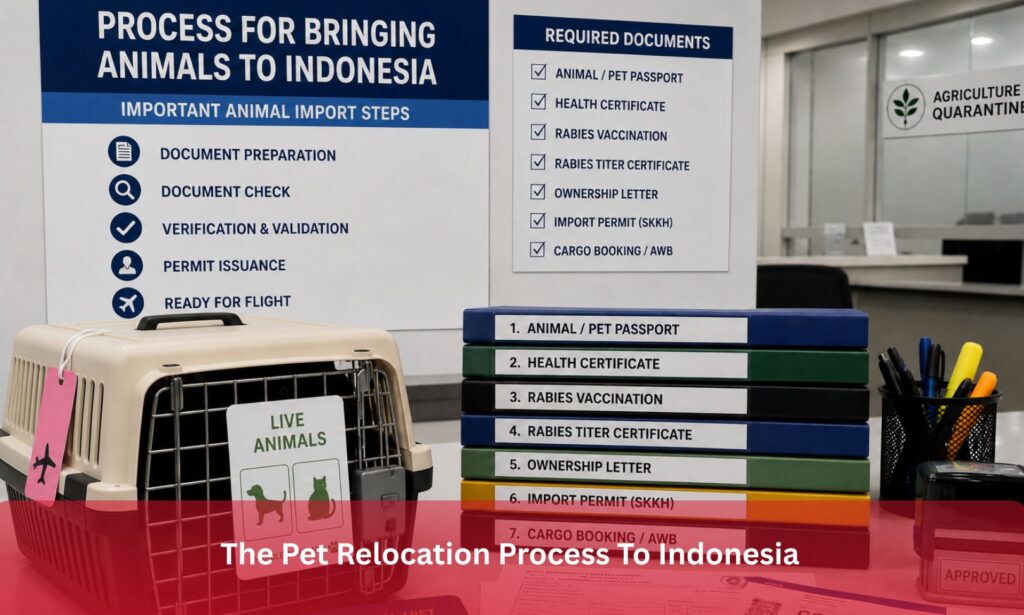
International arrivals into Indonesia are handled at Soekarno-Hatta in Jakarta, where your pet clears the required quarantine. Release in Jakarta does not automatically allow onward travel to Bali, so the island leg is planned as a separate step with Bali’s current entry conditions checked first.
If you are planning a move, tell us where your pet is now, the species, breed, age and weight, and your target month. We will confirm the current requirements for the route, including anything the rabies situation adds, and give you a realistic timeline. Preparation generally runs around six to eight weeks, and we will not quote you a four week move.
What to do if your dog has contact with a free roaming animal
Contact happens, even to careful owners, and the useful thing is knowing the sequence in advance rather than working it out while upset.
Separate the animals safely, without putting your hands between them. Check your dog over once things are calm, looking for puncture wounds, which are easy to miss under a coat and are the ones that matter most. Wash any wound thoroughly with soap and running water, and then contact your veterinarian straight away rather than waiting to see how it looks tomorrow. Tell the clinic it was contact with a free roaming dog, because that detail changes how they advise you.
If a person was bitten or scratched, including you, seek medical advice immediately. Post exposure treatment is time sensitive, and the decision is a doctor’s to make, not something to research online.
Keep your dog’s vaccination record somewhere you can reach it quickly, including a photo on your phone. If your dog is already up to date, that record is the first thing a vet will want to see, and having it to hand turns an anxious evening into a straightforward consultation.
FAQ
Is Bali safe for my dog?
Many thousands of residents and expats keep dogs in Bali. The risk is manageable with a current rabies vaccination, secure containment, and avoiding contact with free roaming dogs. The risk is not zero, and it is higher for a dog allowed to roam.
Does the rabies situation stop me bringing a pet in?
No. It shapes the vaccination and documentation your pet needs, and the route. We confirm the current requirements for your origin country before planning the move.
Will it be harder to take my pet out of Bali later?
Often yes. Many destinations apply stricter conditions to animals from rabies affected areas, including titre testing and waiting periods. If you may move on, start that preparation early rather than at the end.
How often does my dog need a rabies booster in Bali?
Follow the schedule your veterinarian sets for the vaccine used. Keep the record current, because it matters both for protection and for any future travel.
What should I do if my pet is bitten?
Treat it as urgent. Wash the wound thoroughly and contact a veterinarian immediately. If a person has been bitten or scratched, seek medical advice without delay.
Is Bali expected to become rabies free?
The province has stated a goal of rabies free status by 2030, supported by ongoing mass vaccination. Progress is reported periodically, so check current official updates rather than relying on a target date.