Moving Pets from Qatar and Saudi Arabia to Indonesia
Moving a dog or cat from Qatar or Saudi Arabia to Indonesia comes down to two sets of paperwork and one hard constraint. The export health certificate is issued through the government veterinary authority in the country you are leaving, the Indonesian import permit is arranged on our side, and your pet flies as cargo into Soekarno-Hatta in Jakarta, where the required arrival quarantine is completed. The hard constraint is the Gulf summer, which shapes which flights will take your animal at all.
This guide covers Qatar and Saudi Arabia. If you are leaving the United Arab Emirates, our UAE to Indonesia page covers that route.
Who signs the export papers
In both countries the export health certificate is a government document, not something your private clinic issues on its own. Your vet does the clinical work and keeps the records. The ministry then checks and certifies the export.
- Qatar: the export certificate is issued through Qatar’s government veterinary services. Pet owners in Doha start with their own vet, who prepares the records, and then apply to the government office for the export certificate. Which office and which online channel applies can change, so we confirm it for your dates.
- Saudi Arabia: the Ministry of Environment, Water and Agriculture (MEWA) runs an export permit service for pets (cats and dogs) through its Naama e-services platform. Owners in Riyadh, Jeddah or the Eastern Province apply once the clinical records are complete.
Neither ministry publishes a pet export timetable we would quote as fixed, and processes in both countries move online and change format from time to time. Requirements can change, so we confirm the current rules for your route before anything is booked. The certificate also has to state what Indonesia asks it to state, which is why the Indonesian import permit position should be settled before the ministry appointment, not after it.
What your vet does first
The clinical groundwork is the same from Doha or Riyadh, and the order matters more than the speed.
- Microchip before vaccination. An ISO microchip has to be implanted and readable before the rabies vaccination, so the vaccine can be recorded against that number. The same chip number must appear on every document.
- Rabies vaccination, correctly dated. Later deadlines are counted from this date, so a missing or unclear date causes delays further down the line.
- Rabies antibody titre test where it applies. Your vet draws the blood and sends it to an approved laboratory. The result is checked by the quarantine vet on arrival in Indonesia, and it is usually the longest single item in the plan.
- Parasite treatments and a health examination close to departure, recorded so they can be certified.
Our guide on getting your pet’s health certificate approved for Indonesia entry explains what the Indonesian side looks for on that certificate.
The Gulf heat and your flight
This is the part of a Gulf move that catches people out. Airlines carrying pets in the hold apply seasonal heat embargoes, and in the Gulf summer those rules can close a route for weeks, especially for afternoon departures and long ground times on the tarmac. A plan that works in February may not work in July.
Snub nosed breeds feel this most. Pugs, bulldogs, Persians and other flat faced cats and dogs face extra airline conditions all year, and in hot months some carriers stop accepting them. If your pet is one of these breeds, check what is actually bookable before you choose a moving date, because a pet refused at check in is a cancelled move rather than a late one.
A few practical points for this route:
- Prefer night or early morning departures from Doha or Riyadh where the schedule allows.
- Keep connections short and few. A direct or single connection itinerary into Jakarta is usually kinder than a cheaper one with a long layover.
- Book the pet before you book yourself. Space for live animals is limited per flight, and your own ticket is easy to move; the animal’s slot is not.
The crate
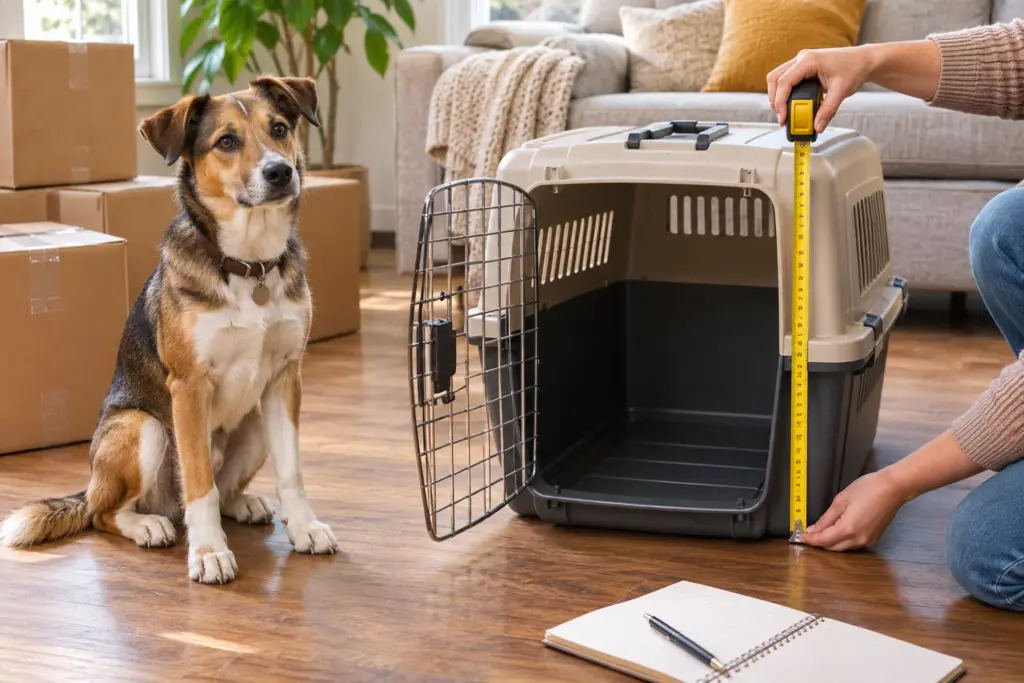
The travel crate is checked against IATA live animal requirements and measured against your pet, not against what looks generous. Your pet should stand without the head touching the roof, turn around, and lie down naturally. A crate that is too large is also a problem, because the animal can slide around in turbulence.
On a hot route, ventilation and water matter more than usual. Choose a crate with ventilation on all sides, fit a water bowl that can be refilled from outside without opening the door, and start crate training at the beginning of the process. An animal that already naps in the crate at home handles the journey far better.
Arrival in Jakarta, then Bali if needed
International pet arrivals into Indonesia are handled in Jakarta. Your pet lands at Soekarno-Hatta, goes to the cargo area, the documents are presented, and Badan Karantina Indonesia carries out the required arrival quarantine before release. How long that takes is typically set by the quarantine officers on the day, so we plan with a margin rather than a fixed promise. Our guide on what happens when your pet lands at Jakarta airport walks through that sequence step by step.
If your new home is in Bali, release in Jakarta does not automatically allow onward travel to the island. Bali has its own entry conditions, and the domestic leg is planned separately once they are confirmed. Our guide to the Jakarta to Bali flight after quarantine explains how that second leg works.
How long to allow
Plan for around six to eight weeks from a standing start, and longer where a titre test applies or your pet’s breed limits airline options. On Gulf routes, also plan around the season: if your move falls in the hottest months, start earlier so you have room to shift the flight date without losing the documents you have already prepared.
Anyone offering to move your pet from Qatar or Saudi Arabia in four weeks should be able to explain which step they plan to skip.
Our Qatar to Indonesia page shows the service side and photos from our own relocations on that route, sending a pet to Indonesia sets out the full import sequence, and pet relocation to Indonesia lists the other countries we move pets from.
Send us your city, your pet’s species, breed, age and weight, the crate size, and your target month. We will come back with the sequence, the airline options that work for your animal in that season, and a timeline you can plan around.
FAQ
Can my pet fly from Doha or Riyadh straight to Bali?
No. International pet arrivals into Indonesia are handled in Jakarta, where your pet clears quarantine first. Bali is a separate domestic leg arranged afterwards, once Bali’s current entry conditions are confirmed.
Who issues the export health certificate in Qatar?
Qatar’s government veterinary services certify pet exports. Your own vet prepares the clinical records first, and we confirm the current office and application steps for your dates.
Who handles pet export in Saudi Arabia?
The Ministry of Environment, Water and Agriculture (MEWA), which lists an export permit for pets among its e-services. Your vet completes the microchip, vaccination and health checks first, then the export is applied for through MEWA.
Can my pet travel during the Gulf summer?
Sometimes, but with fewer options. Airlines apply heat embargoes that can stop pets flying in the hold on certain routes and times, and flat faced breeds are affected most. We check what is bookable for your animal before you fix a date.
Does my pet need a rabies titre test?
It depends on the current Indonesian requirements for your route. Where it applies, it comes with a waiting period, so it needs to be identified at the very start of planning.
Will my pet travel in the cabin?
On this route pets normally travel as cargo. Some airlines allow hand carry or a VIP handler arrangement on particular services, which we confirm for your specific booking rather than assume.